Monday, 11 April 2011
Pied Butcher
As with many avian hunters, the Pied Butcher-birds Cracticus nigrogularis like to use the power lines as a vantage point to spot their prey, lizards, small birds, frogs, grasshoppers and other insects. Another hunting technique is to follow you when you are on the mower or tractor cutting grass or burning off a paddock, then they pounce on any likely prey that is flushed out. They get their name from their habit of wedging their larger prey in the fork of a tree branch to assist the dismemberment, but they do not store their food like "Old World" shrikes, which are often referred to as butcher-birds. Two species of Butcher-birds are widespread through Australia and both are regular visitors on our property. They are renowned for their beautiful musical calls with fluting warbles and trills.
Saturday, 9 April 2011
Whip cracking
A sound synonymous with the Australian bush (on the east coast), is the unforgettable call of the Eastern Whipbird Psophodes olivaceus, a piercing whipcrack whistle heard on many bushwalks and usually without seeing the bird making the call. They are a ground frequenting bird found in the dense underscrub of rainforests and their margins, as well as the wet woodlands. We are fortunate to have at least one pair that spend some time around our house in the dense shrubs. The male is responsible for the whipcrack and the female if in the vicinity generally answers with a resemblance of an echo. As well as the whipcrack they have chuckles and melodic whistles in their repertoire. The male at times will come to the garden behind the cottage to make his whipcracks as the back porch acts like a sound shell to broadcast the call. They are very wary birds and will quickly disappear if they see you. This photo was taken from inside the house with the windows acting like a mirror to block his view inside.
Friday, 8 April 2011
A Common Brown shows her colours
At rest on the leaf and wood litter a Common Brown (f) Heteronympha merope merope is well disguised and often overlooked until taking flight to give itself away, with a show of colour. One of our most common butterflies, they are regularly seen in the garden feeding in flowers or at rest on the ground.
Today's fine weather was appreciated by the butterflies to catch up on a good feed after a few days of rain.
This female feeding on Buddleja flowers is showing a bit of colour on the fore wing but as well as feeding also took the opportunity to do some sunbathing and show her hidden colours.
Thursday, 7 April 2011
Fungi fruits
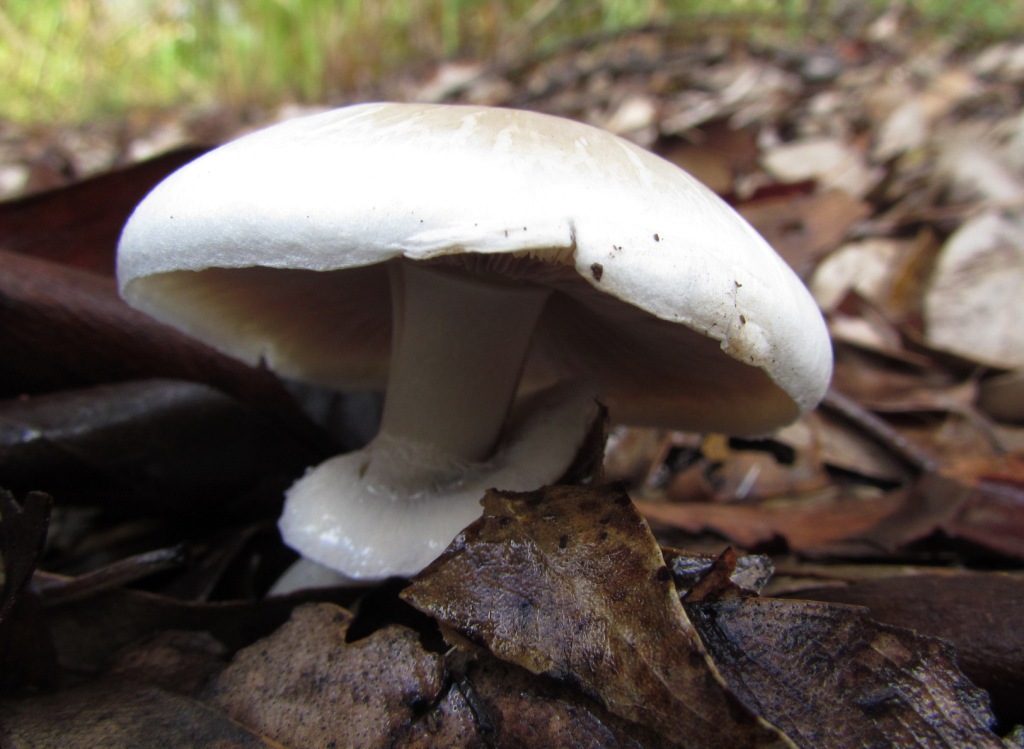
We are having on going wet weather and it is just perfect for fungi fruiting, so today between rain showers I managed to get a few shots of the fungi fruits that are pushing up all around the property. They have wonderful colour and shape but identification is a bit tricky for me so I am not confident enough to to name them.
At last one I know, a field mushroom Agaricus campestris
Friday, 1 April 2011
False eyes, false teeth
| Sword-grass brown Tisiphone abeona abeona |
| Diamond python Python spilotus spilotus |
| Python about to slide under the garden fence, with the most recent meal a visible bulge in the mid-section. |
Subscribe to:
Posts (Atom)