Tuesday, 30 November 2021

Not so fiery skimmer


 Noticed a dragonfly alight on a plant and managed to get a photo before it moved on to its next stop


. Checking the identity I found it to be a female Fiery Skimmer Orthetrum villosovittatum.and unlike the male that I posted in 2012 lacks the bright red colouring.


Thursday, 4 November 2021

A name that suits

Digging in our mound of woodchip mulch I brought to the surface a beetle of the species that is the largest in Australia. The suitably named Rhinoceros Beetle (Xyltrupes S) that is found through Islands to the north of Australia and down the coastal regions of Queensland and less common further south.to about Sydney.


 Only the male beetles have the horns which they use to fight with other males coming into their territory looking for a mate. The larvae are very large curl grubs that feed on decaying vegetation, rotting timber and in our case woodchip mulch. When disturbed they have an aggressive hissing sound to scare off attackers and also emit a chemical defense.

Renowned for their strength and size (up to 70mm) it is not surprising that they are also called Hercules, Ulysses and elephant beetles.

Thursday, 28 October 2021

A new skipper

I noticed one of the skipper family of butterflies land on a flower in the garden and it did look a little different to other skippers that I have seen on the property. It stayed quite still on the flower and allowed me to get a few photos with the phone camera.


 When I had a chance to identify it I was pleased to see that it was one I hadn't photographed previously however as many species in this family are very similar I may have seen one before. They are found in NSW and Victoria and the lavae feed on Lomandra mat rush species of which we have quite a lot on the property.

Friday, 10 September 2021

Colourful but prickly critter

A colourful but prickly critter,found in the garden when I was doing a bit of tidying.I hadn't see one at our place before, although I didn't have to spend much time identifying as I had done that when my friend Melisa found one at her place a year ago, almost to the day.


 It is the caterpillar of the Patterned Notodontid Moth (Aglaosoma varigata) and it is about 75mm in length. I haven't seen a moth here as yet but hoping one might visit once this caterpillar pupates.

The moth is found in Eastern Australia through to South Australia and the caterpillar feeds on a range of plant species.

Tuesday, 1 June 2021

Unwelcome Visitor

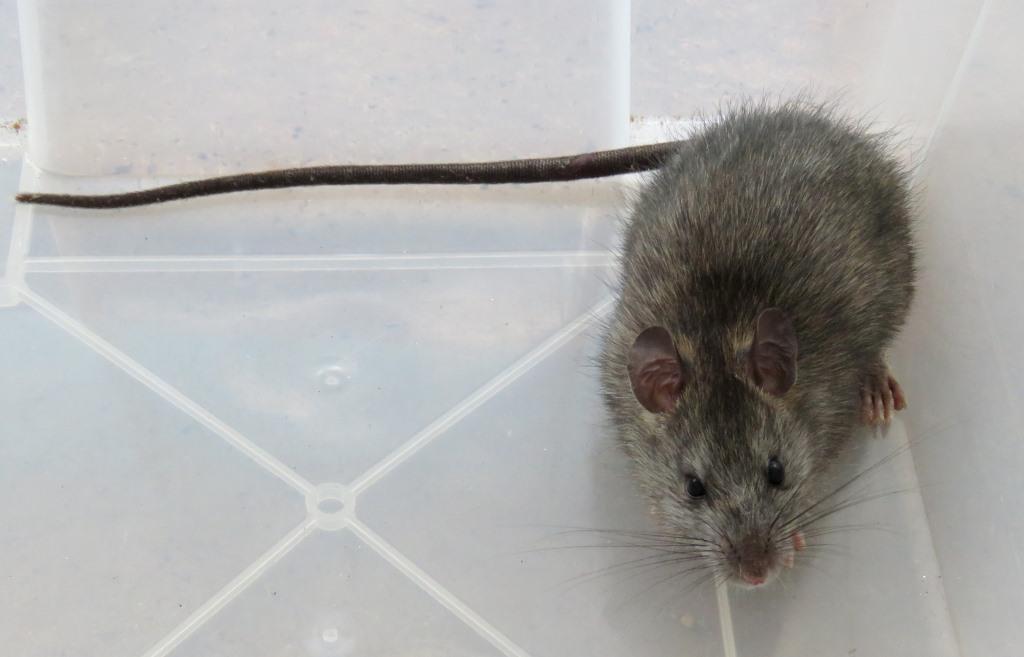
We have been having some visits from as couple of our native critters, Bush rats and Antechinus that like to get into the house and find things to nibble or a nice spot to make a nest. However last night we had a visit from an introduced critter that has become quite widespread in Australia since arriving as a stowaway on ships probably as far back as the First Fleet, a Black Rat Ratus ratus.